


 Dr. Prabha S. Chandra is Senior Professor of Psychiatry and Director-in-Charge at the National Institute of Mental Health and Neurosciences (NIMHANS), Bengaluru. She is internationally recognised for her contributions to women’s mental health and serves as Editor-in-Chief of *Archives of Women’s Mental Health* published by Springer Nature.
Her areas of expertise include reproductive psychiatry, postpartum psychosis, pregnancy cohorts, and mental health interventions for survivors of intimate partner and sexual violence. Over the course of her career, she has contributed to advancing research, ethics, and interdisciplinary approaches in psychiatric care, with a strong focus on improving mental health outcomes for women across different life stages.
At NIMHANS, she has held several senior leadership roles, including Dean of Behavioural Sciences and Head of the Department of Psychiatry. A widely published researcher, Dr. Chandra is a Fellow of multiple professional academies and recipient of several national and international honours in psychiatry and mental health research.
 Dr. S. Harikrishnan is a cardiologist, interventional specialist, and cardiovascular epidemiology researcher with over two decades of experience in clinical care, research, and academic leadership. He serves as Senior Professor in the Department of Cardiology at the Sree Chitra Tirunal Institute for Medical Sciences and Technology (SCTIMST), Thiruvananthapuram, where he has contributed extensively to advancing cardiovascular medicine in India.
His areas of expertise include heart failure, interventional cardiology, coronary physiology, and public health approaches to cardiovascular disease. Dr. Harikrishnan has played a leading role in establishing large-scale national research initiatives, including the National Heart Failure Registry of India, which brings together data from multiple centres across the country, and India’s first cardiovascular biobank focused on heart failure research. He is also Principal Investigator of the ICMR-supported Centre for Advanced Research and Excellence in Heart Failure (CARE-HF).
A prolific researcher, Dr. Harikrishnan has authored more than 200 peer-reviewed publications and contributed to major academic texts in cardiology. He has held leadership roles within the Heart Failure Association of India and continues to shape research, policy, and clinical practice in cardiovascular health.
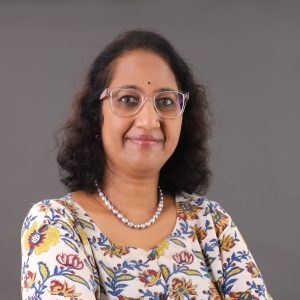 Dr. Roopa Shivashankar is a public health physician and epidemiologist with over two decades of experience in research, implementation, and health systems strengthening, particularly in the prevention and control of non-communicable diseases. She currently serves as Scientist E in the Division of Delivery Research at the Indian Council of Medical Research (ICMR), New Delhi, where she leads national implementation research initiatives focused on diabetes and hypertension across multiple districts in India.
Her work has centred on translating evidence into public health practice, with expertise in cardiovascular disease prevention, epidemiology, and primary healthcare delivery. Dr. Shivashankar has contributed to major national initiatives, including the India Hypertension Control Initiative, supporting treatment protocols, provider training, and digital systems for patient monitoring. She has also worked closely with government agencies, academic institutions, and international partners to strengthen public health policy and implementation.
An accomplished researcher, she has authored nearly 80 peer-reviewed publications and contributed extensively to large-scale epidemiological studies in South Asia. Her work continues to advance implementation science and equitable approaches to chronic disease prevention and care.
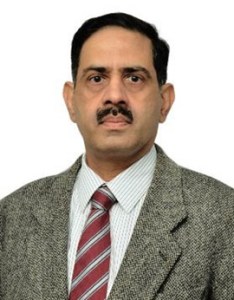 Dr. Balram Bhargava is a cardiologist and public health leader with over 35 years of experience in clinical care, research, and health systems strengthening. He has served as Secretary of the Department of Health Research and Director General of the Indian Council of Medical Research (ICMR), Government of India.
A specialist in interventional cardiology, Dr. Bhargava has contributed to the development of cost-effective cardiovascular technologies, including a platinum-iridium coil coronary stent, with a focus on improving access to affordable care. Over his career, he has treated more than 250,000 patients with cardiovascular conditions and authored over 300 peer-reviewed publications in national and international journals.
His contributions have been recognised with several prestigious awards, including the Padma Shri, the Dr. Lee Jong Wook Memorial Prize from the World Health Organization, and the UNESCO Equatorial Guinea International Prize for Research in the Life Sciences.
Dr. Bhargava’s work continues to contribute to advancements in cardiology, medical research, and public health in India.
 Dr. Arvind Kasthuri is a public health physician and academic specialising in community geriatrics, epidemiology, and rural health systems. He serves as Head of the St John’s Geriatric Centre and Professor of Community Medicine at St. John’s Medical College & Hospital, Bengaluru.
With a career spanning over two decades, Dr. Kasthuri has focused on improving health outcomes for ageing populations in underserved settings. His work addresses non-communicable diseases such as hypertension, diabetes, and stroke, alongside broader challenges of access, affordability, and health literacy among the elderly. He has played a key role in developing community-based models of elder care, including village-level senior centres that enhance outreach and continuity of care.
A widely published researcher and dedicated mentor, he has received multiple teaching and innovation awards. His work continues to inform public health practice and strengthen equitable, community-oriented approaches to ageing in India.
 Dr. Abhishek V. Raut is a public health physician, academician, and implementation researcher specialising in Community Medicine. He serves as Professor in the Department of Community Medicine at the Mahatma Gandhi Institute of Medical Sciences (MGIMS), Sevagram, Maharashtra. His work focuses on strengthening public health systems through community-based participatory research, with particular emphasis on reducing health inequities in rural settings.
Dr. Raut’s research spans non-communicable disease prevention, health promotion, early childhood development, adolescent health, and maternal-child health. He has contributed extensively to participatory models of care and behaviour change interventions aimed at improving community health outcomes. His interests also include epidemiology, implementation science, and rural health systems strengthening.
With more than 120 publications and significant contributions to multicentric public health research projects, Dr. Raut is an active contributor to implementation research in India. He is a FAIMER Fellow and continues to engage in academic mentorship and public health research focused on community-centred approaches.
 Professor Vivekanand Jha is Executive Director at The George Institute for Global Health, India, Chair of Global Kidney Health at the Faculty of Medicine, Imperial College London, and past President of the International Society of Nephrology. He established India’s first basic science research laboratory in Nephrology and has worked extensively with the WHO to develop clinical practice guidelines and advocacy papers.
His research focuses on understanding the health and societal impact of kidney diseases globally, and the development of affordable, scalable, and sustainable prevention tools. Professor Jha has lectured extensively around the world and is a prolific writer and editor.
 Prof. Reddy, a cardiologist and epidemiologist, is the founder and first executive Director of the Centre for Chronic Disease Control. He is also former President of the Public Health Foundation of India (2006–22) and Honorary Distinguished Professor, Chancellor of PHFI University of Public Health Sciences, also the Centre for Universal Health Assurance, Indian School of Public Policy, PHFI Institute of Public Health Sciences. He was the Head of Cardiology at AIIMS and the first Bernard Lown Visiting Professor of Global Cardiovascular Health at Harvard (2009–13). He is currently Adjunct Professor at Harvard, Emory, Sydney, and Pennsylvania universities, and advises institutions such as McGill University and the University of Michigan. Internationally, he has served as President of the World Heart Federation (2013–14), co-chair of the UN SDSN Health Group, and member of several WHO expert panels. Nationally, he chaired the High-Level Expert Group on Universal Health Coverage (Planning Commission, 2010–11), advised several state governments, and led the NHRC Core Advisory Committee on Health.
Prof. Reddy has over 590 publications, the former editor of the National Medical Journal of India for 10 years, and authored Make Health in India and Pulse to Planet. His numerous honours include the WHO Director General’s Award, the Luther Terry Medal, the Queen Elizabeth Medal for Health Promotion, the Padma Bhushan, and multiple honorary doctorates.
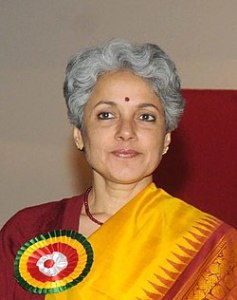
Soumya Swaminathan, a pediatrician and global expert in tuberculosis and HIV research, recently served as WHO’s Chief Scientist and previously as Director General of the Indian Council of Medical Research (ICMR), Ministry of Health and Family Welfare, Government of India (2015-2017). She assumed the role of Chairperson at the M S Swaminathan Research Foundation (MSSRF) in February 2023. She is also the Principal Advisor to National Tuberculosis Elimination Programme (NTEP), Ministry of Health and Family Welfare, Government of India.
With over 40 years of experience in clinical care and research, Dr Swaminathan has dedicated her career to translating research into impactful health programs. As Secretary to the Government of India for Health Research, her efforts were focused on integrating science into health policy-making, enhancing research capabilities in Indian medical institutions, and fostering global partnerships in health sciences.
Dr Swaminathan received her academic training in India, the UK, and the USA, and has authored over 480 peer-reviewed publications and book chapters. She holds honorary doctorates from prestigious institutions including Karolinska Institute, EPFL Lausanne, and the McGill University, Canada. Her current focus is on addressing the health impacts of climate change, especially on women and children and food system transformations to strengthen nutrition security in India and regionally.
 Prof. Krishna Kumar is a distinguished pediatric cardiologist with extensive training at leading institutions, including the All-India Institute of Medical Sciences, New Delhi and Boston Children’s Hospital, USA. He has earned international recognition for his expertise and has been instrumental since 1998 in establishing and leading the pediatric heart program at Amrita Hospital, Kochi, elevating it to global standards through excellence in clinical care, research, and training.
His clinical expertise spans echocardiography, catheter-based interventions, and intensive care. With over 250 scientific publications and a lifelong commitment to advancing pediatric cardiac care, Dr. Krishna Kumar continues to shape the future of pediatric cardiology and improve outcomes for children worldwide.
 Mr. Rajeev Sadanandan, a member of the Indian Administrative Service, is a health policy and systems expert based in Kerala, India. He was the health secretary of Kerala for 11 years during which he played transformative role to reform health systems in Kerala. Mr. Sadanandan set up Kerala’s AIDS control programme, the Revised National Tuberculosis Control Programme as well as the Programme for the control of Non Communicable diseases. He commenced the digitalisation of Kerala’s health system through the E-Health programme. He designed and executed the ‘Aardram Mission’ widely credited to have considerably improved government health systems. He led on the control of the Nipah outbreak and was the Advisor to the Chief Minister of Kerala on Management of COVID.
Mr. Sadanandan was the founder CEO of Health System Transformation Platform, a think tank on health policy and systems in New Delhi. He had worked as CEO of India’s national social health insurance programme, in addition to holding many other positions in state and federal governments and a brief stint in UNAIDS. He was a Commissioner on the Lancet Global Health Commission on Financing Primary Health Care. Mr. Sadanandan is currently a member of the Technical Advisory Panel of the Pandemic Fund set up by the World Bank and the Policy Makers Forum under the Alliance for Health Policy and Systems Research of the World Health Organisation, Geneva. Mr. Sadanandan is a member of the technical committees of many international and national research projects.
 Dr. Jeemon is a trained epidemiologist. He developed a focus on cardiovascular disease epidemiology over the last decade. His research interests are in the development and evaluation of quality improvement initiatives and complex public health interventions for the prevention and control of chronic diseases in India. His current focus is on the epidemiology of heart failure in India, the management of multi-morbidity in primary care settings, and the development of innovative solutions for the management of cardiovascular conditions in low- and middle-income country settings. He is also the winner of the Shanti Swarup Bhatnagar Prize in medical sciences (2021).
 Prof. (Dr) Narendra Kumar Arora, a distinguished paediatrician and public health expert, is currently serving as the President of AIIMS Bilaspur (H.P.). He earlier served as President of AIIMS-Deoghar, Jharkhand (2020–2025) and AIIMS-Patna, Bihar (2018–2022). Formerly, he was Professor of Paediatrics (Gastroenterology, Hepatology & Nutrition) at AIIMS-New Delhi until 2007. Since 2005, he has been the Executive Director of The INCLEN Trust International and also served as Executive Director of the Child Health and Nutrition Research Initiative (CHNRI) from 2010 to 2014. He is an accomplished medical professional who dedicated his career to advancing maternal & child health, infectious diseases & immunization, and public health policy, leaving a significant impact both nationally and internationally. Dr Arora has devoted his career to advancing maternal and child health, infectious disease prevention, immunization, and public health policy. Internationally, he has held key leadership roles at the World Health Organization (WHO), including as a member of the Strategic Advisory Group of Experts (SAGE) on Immunization, Strategic and Technical Advisory Group of Experts (STAGE) for Maternal, Newborn, Child, and Adolescent Health & Nutrition, the Global Advisory Committee on Vaccine Safety (GACVS), the COVAX Independent Allocation of Vaccines Group (IAVG), and Technical Advisory Group on COVID-19 Vaccine Composition (TAG-CO-VAC). At the national level, Dr Arora played a pivotal role in shaping India’s immunization and public health strategies. He has been a core member of the National Technical Advisory Group on Immunization (NTAGI) and chaired several key committees during the COVID-19 pandemic. He chairs the National Certification Committee for Polio Eradication (NCCPE) since 2014 and was its coordinator between 1998 and 2014, and also chairs the National Verification Committee for Measles, Rubella and Congenital Rubella Syndrome elimination. Dr. Arora leads various research initiatives focusing on clinical epidemiology, trials, program evaluation, health systems improvement and policy development. He established super-specialty Pediatric Gastroenterology & Hepatology in AIIMS New Delhi. He also led nationwide research priority setting for maternal, new-born, and child health and nutrition in India. His work has influenced health policy decisions, ensuring that they are evidence-based and aligned with the needs of the population. He collaborates with national and international health organizations, fostering partnerships that enhance health research and interventions.